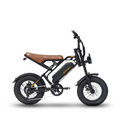
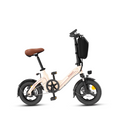
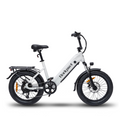
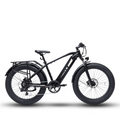
"How far can an e-bike really go on one charge?" It is one of the most important questions to consider before buying an electric bike.
E-bike specifications often highlight a maximum range, but the distance you actually get can be very different from the number shown on the product page. Your weight, riding speed, pedal assist level, terrain, weather, and tire pressure can all affect how much energy your e-bike uses.
For example, an e-bike that can reach around 80–90 km under ideal conditions may deliver a different range during everyday commuting, especially with higher assistance, heavier loads, hills, or cold weather.
👉 Understanding real-world e-bike range can help you choose the right battery capacity and avoid relying on maximum range numbers alone.
What Does E-Bike Range Actually Mean?
E-bike range is the distance an electric bike can travel on a single battery charge. When a manufacturer lists a maximum range, that figure is normally based on specific riding conditions:
- A relatively light rider
- Flat or favorable terrain
- Moderate speed
- Low pedal assistance
- Good weather
- Proper tire pressure
Real-world riding is rarely this consistent. You may encounter hills, headwinds, traffic, frequent acceleration, heavier loads, or higher assistance levels. This is why the advertised range should be treated as a reference point rather than a guaranteed distance.
👉 The more useful question is: How far can the e-bike go under the conditions I actually ride in?
How Far Can an E-Bike Go on One Charge?
There is no single range that applies to every e-bike or every rider. Instead, think about the distance you normally travel and leave some extra range for real-world conditions.
| Riding Pattern |
Suggested Minimum Range |
| Short urban trips |
20–30 km |
| Daily commuting |
40–60 km |
| Longer weekend rides |
60–80 km |
| Long-distance touring |
80 km+ |
These are practical planning ranges rather than guaranteed distances. Having additional battery capacity gives you more flexibility if you encounter hills, strong wind, cold weather, or an unexpected detour.
Advertised Range vs Real-World Range
One of the biggest mistakes when comparing e-bikes is assuming that the advertised maximum range represents normal everyday riding. Consider two riders using the same e-bike:
-
Rider A — 50–60 kg, lower pedal assistance, moderate riding speed, relatively favorable terrain. This type of riding may allow the rider to approach the upper end of the manufacturer's claimed range.
-
Rider B — Around 88 kg, higher or mixed assistance, more frequent acceleration, mixed terrain. The same e-bike may provide considerably less range.
👉 Neither result means the battery is performing incorrectly. The riders are simply using different amounts of energy.
Real-World E-Bike Range: A Practical Example
A useful way to understand e-bike range is to compare different riding conditions rather than looking at a single maximum number. Bodywel testing under ideal conditions has shown a potential range of around 80–90 km. However, real-world results can vary:
- A lighter rider weighing around 50–60 kg, using lower pedal assistance under favorable riding conditions, may get close to the upper end of that range.
- A rider weighing around 88 kg using a mixture of riding conditions and assistance may achieve around 50–60 km.
👉 An advertised range does not represent one fixed result for every rider. Your actual e-bike range depends on how much energy your particular ride requires.
What Factors Affect E-Bike Range?

1. Rider Weight
Rider weight has a direct effect on energy consumption. The motor needs to move the combined weight of the rider, bike, backpack, shopping, and other cargo. A heavier total load generally requires more energy, particularly when climbing hills or accelerating frequently.
2. Riding Speed
Higher speeds generally require more energy, particularly because air resistance increases as speed rises. If maximum range is your priority, riding at a moderate and consistent speed can help reduce energy consumption.
3. Pedal Assist Level
Your assist level is one of the easiest factors to control.
-
Lower assistance → greater potential range
-
Higher assistance → shorter potential range
👉 This is why riders who use the same bike can experience very different battery performance.
4. Terrain
Flat roads generally require less energy than steep climbs. If your route includes long hills, mountain roads, loose gravel, rough trails, or frequent climbs, your e-bike may use significantly more battery than on flat pavement. If you regularly ride in hilly areas, it is worth choosing more battery capacity than your minimum daily distance might suggest.
5. Weather and Temperature
Strong headwinds increase the effort required to maintain speed. Cold temperatures can reduce battery efficiency, while wet roads and certain surfaces can increase rolling resistance. For winter commuting, it is sensible to leave additional battery capacity rather than planning a trip around the maximum advertised range.
6. Tire Type and Tire Pressure
Narrower road-oriented tires generally have lower rolling resistance on smooth pavement. Fat tires can provide greater stability, comfort, and traction on mixed surfaces, but their wider contact area can require more energy depending on tire design and riding conditions. Checking your tire pressure regularly is one of the simplest ways to help maintain efficient riding.
How to Calculate E-Bike Battery Capacity
When comparing e-bike batteries, you may see specifications such as 36V 15Ah, 48V 13.5Ah, or 720Wh. The basic calculation is simple:
Voltage × Amp-hours = Watt-hours
For example: 48V × 15Ah = 720Wh
Watt-hours (Wh) indicate approximately how much energy the battery can store. A larger Wh rating generally means more available energy. However, battery capacity alone does not determine range — a 720Wh battery can produce different real-world results depending on the bike, rider, terrain, speed, and assistance level.
Why Wh Is More Useful Than Ah When Comparing Batteries
Amp-hours can be misleading when comparing batteries with different voltages. For example:
- 48V × 15Ah = 720Wh
- 36V × 20Ah = 720Wh
Although the Ah figures are different, both batteries have the same nominal watt-hour capacity. This is why Wh is usually a more useful number when comparing the energy capacity of different e-bike batteries.
👉 When shopping for an e-bike, look at battery voltage, Ah, and especially Wh together, rather than comparing Ah alone.
Does Motor Power Affect E-Bike Range?
Motor power and battery capacity are related, but they are not the same thing. A higher-rated motor does not automatically mean a longer range. In fact, using more motor power aggressively can increase energy consumption — frequent hard acceleration or climbing at high assistance can drain a battery faster than moderate riding.
👉 For EU buyers, motor specifications should also be considered together with the applicable local e-bike regulations and classification requirements.
How Much Battery Capacity Do You Need?
-
Short urban trips — A smaller battery may be enough if you can recharge regularly. This can also help keep the overall bike lighter.
-
Daily commuting — Additional battery capacity provides more flexibility, especially if you cannot recharge at work or during the day.
-
Weekend and adventure riding — A larger battery can provide greater freedom, particularly when your route includes hills, gravel, or other energy-intensive terrain.
-
Long-distance riding — Battery capacity becomes even more important because charging opportunities may be limited.
How to Get More Range From Your E-Bike
-
Use lower assistance when possible — Use higher assistance when climbing, then reduce it on flatter sections.
-
Maintain proper tire pressure — Check tires regularly and keep them within the recommended pressure range.
-
Avoid unnecessary weight — A heavy backpack or unnecessary cargo increases the total load.
-
Maintain a consistent speed — Smooth acceleration and a steady riding pace reduce unnecessary energy consumption.
-
Plan your route — Consider hills, traffic, and road surfaces before starting a long ride.
How Long Does an E-Bike Battery Last?
"Battery life" can mean two different things: how far the battery takes you on one charge (range), or how long the battery remains usable (lifespan). A lithium-ion e-bike battery gradually loses capacity over time through repeated charging cycles. Its long-term performance can be affected by charging habits, storage conditions, temperature, and frequency of use. Proper battery care can help maintain usable capacity over time.
How to Choose an E-Bike Based on Your Real Riding Distance
Instead of starting with the bike's maximum advertised range, start with your normal route. Ask yourself:
- How many kilometers do I actually ride in a typical day?
- How much do I weigh?
- Is my route flat or hilly?
- Do I carry cargo?
- What assist level do I normally use?
- Do I ride during winter?
- Can I charge the battery during the day?
👉 For example, if your commute is 15 km each way, your round trip is already 30 km. Choosing an e-bike with a maximum advertised range of 30 km would leave little margin for real-world conditions. The goal is not to buy the e-bike with the biggest battery — it is to choose enough battery capacity for your actual riding conditions.
Which Bodywel E-Bike Is Right for Your Riding Style?
Once you understand your range requirements, the next step is choosing a bike that matches your riding environment.
| Model |
Best For |
Typical Riding |
| Bodywel A26 |
Daily commuting |
City streets |
| Bodywel T16 Pro |
Compact urban mobility |
Short city trips |
| Bodywel F20 |
City + weekend riding |
Mixed roads |
| Bodywel F20 Pro |
Longer recreational rides |
Mixed terrain |
| Bodywel M16 |
Everyday + outdoor riding |
Mixed surfaces |
| Bodywel D6 |
Comfortable all-purpose riding |
Mixed surfaces |
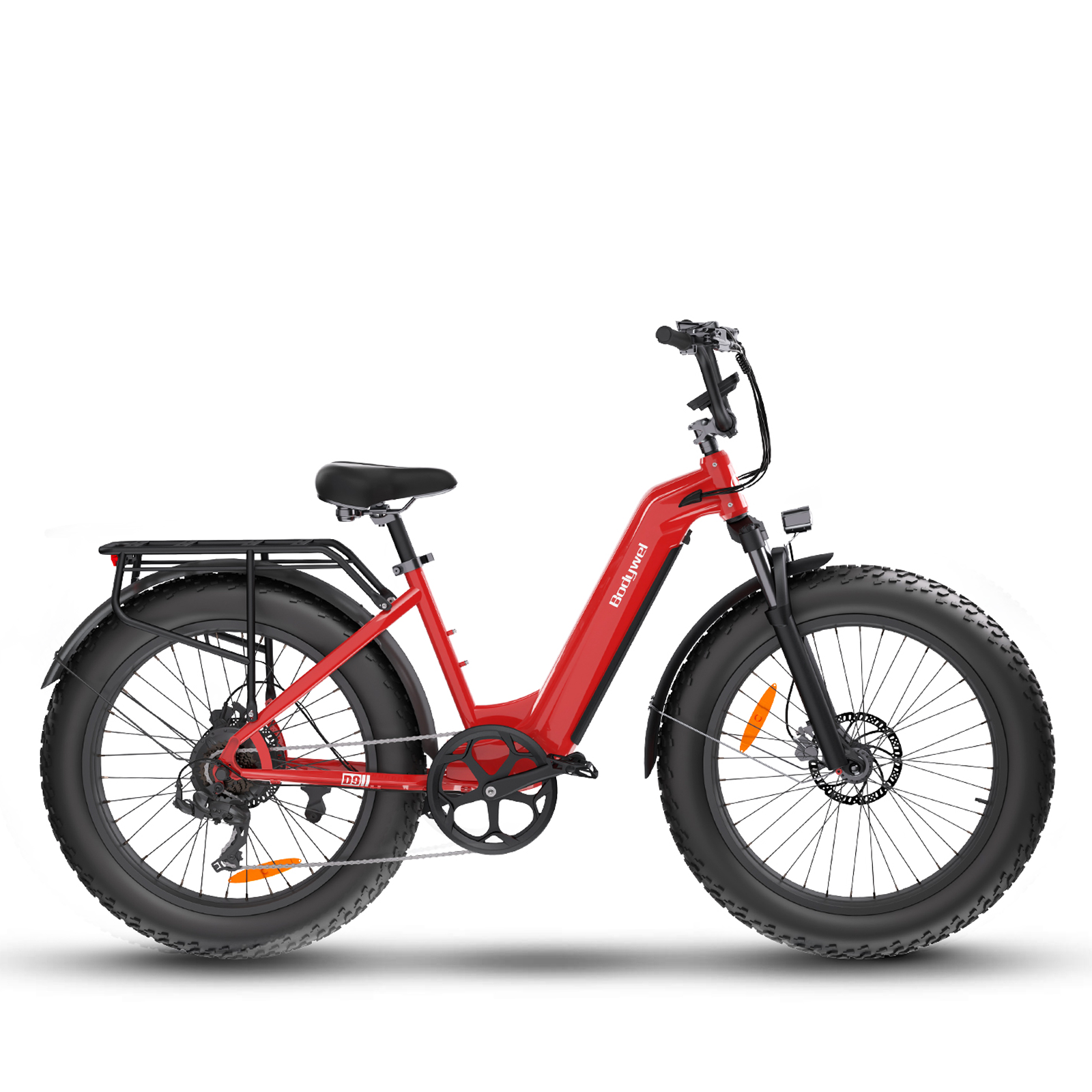
| Bodywel D9 |
Outdoor exploration |
Trails + uneven terrain |
Best for City Commuting: Bodywel A26
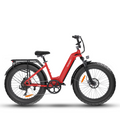
For riders whose main priority is everyday transportation, the Bodywel A26 is designed around comfortable city riding. It is a practical choice for daily commuting, city streets, and regular errands.
Best for Compact Urban Travel: Bodywel T16 Pro
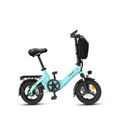
For riders who prioritize storage and portability, the Bodywel T16 Pro offers a folding design suitable for apartment living, short urban trips, and public transportation connections. At around 46.5 lbs, its compact format can be useful for riders who need an e-bike that is easier to store and transport.
Best for City and Weekend Riding: Bodywel F20
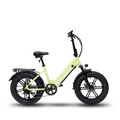
The Bodywel F20 is suited to riders who want one bike for both everyday transportation and recreational riding. Its fat tire design makes it suitable for city streets, parks, gravel roads, and weekend rides, providing a balance between everyday usability and the additional comfort and stability of wider tires.
Best for Longer Adventure Rides: Bodywel F20 Pro
The Bodywel F20 Pro is designed for riders who want a more adventure-oriented fat tire e-bike, suitable for longer recreational rides, mixed terrain, and weekend exploration.
Best for Outdoor and Mixed-Surface Riding: Bodywel M16 and D6
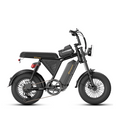
The Bodywel M16 and D6 are options for riders who want to move between everyday riding and outdoor exploration. Their fat tire designs make them suitable for mixed surfaces where stability and comfort are important.
Best for Off-Road Exploration: Bodywel D9
For riders who regularly venture beyond normal city roads, the Bodywel D9 is designed with a more adventure-focused riding style in mind, suitable for uneven routes, outdoor exploration, and trail-oriented riding.
Frequently Asked Questions
How many kilometers can an e-bike go on a single charge?
It depends on the battery, rider, riding style, terrain, weather, and assist level. The manufacturer's maximum range should be treated as a reference rather than a guaranteed distance.
Is 50 km a long range for an e-bike?
For many daily commuters, 50 km can provide a useful amount of range. However, if your round-trip commute is close to 40–50 km, additional range may be useful to provide a safety margin.
Is 80 km a good range for an e-bike?
An 80 km claimed range can be suitable for longer commuting and recreational riding. However, actual range may be lower depending on rider weight, speed, assistance, terrain, temperature, and tire pressure.
How many Wh do I need for an e-bike?
There is no single ideal battery capacity. Short urban trips may require less, while daily commuting and long-distance riding can benefit from a larger battery. Consider your typical distance and riding conditions before choosing battery size.
Does rider weight affect e-bike range?
Yes. A heavier total load generally requires more energy, especially when accelerating or climbing. This is one reason why two riders can achieve different ranges on the same e-bike.
Does riding at higher speeds reduce e-bike range?
Generally, yes. Higher speeds require more energy, particularly because air resistance increases as speed rises. A moderate and consistent riding speed can help improve efficiency.
Does cold weather reduce e-bike range?
Yes. Cold temperatures can reduce battery efficiency and may result in shorter available range. During winter, it is sensible to leave additional battery capacity rather than planning a route around the maximum advertised range.
Final Thoughts
E-bike range is not a fixed number. Think of it as the result of several factors working together: battery capacity + rider weight + riding style + terrain + weather + tires.
Instead of asking "Which e-bike has the longest range?", ask: "How much range do I need for the way I actually ride?"
- If you mainly commute through the city, a practical commuter e-bike may be enough.
- If you combine city riding with weekend adventures, a versatile fat tire e-bike may make more sense.
- If you regularly ride longer or more demanding routes, additional battery capacity can give you greater flexibility.
👉 The best e-bike is not necessarily the one with the biggest battery. It is the one that gives you enough real-world range for your everyday life.