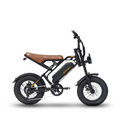
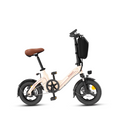
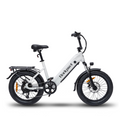
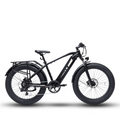
September brings a fresh start for students: new classes, new schedules, and a return to daily routines. It can also mean something less exciting — the daily commute.
For college students living several miles from campus, getting to class every morning can involve crowded roads, expensive parking, packed buses or trains, and a lot of time spent getting from one place to another. Even a relatively short trip can become inconvenient when you have to repeat it five days a week.
An e-bike can offer another option. For students, the biggest benefit of an e-bike is often convenience rather than speed. It can make short urban trips easier, provide more flexibility than a fixed transit schedule, and reduce some of the hassle associated with driving.
But not every e-bike is equally practical for student life. If you live in a dorm or small apartment, use public transportation, or simply want a bike that fits easily into your everyday routine, compact size, folding capability, storage, and urban usability may matter more than maximum range or maximum motor power.
👉 So, what should you actually look for in an e-bike for school or college commuting? And what makes a folding e-bike a practical choice for everyday student life?
Why Consider an E-Bike for the School Commute?
An e-bike can fill the gap between walking, driving, and public transportation. For students, that flexibility can be especially useful because a typical school commute is rarely just about getting from home to class.
Avoid Morning Traffic
Morning traffic can turn a short drive into a much longer journey. If you live relatively close to campus, an e-bike can give you another way to travel without being as dependent on congested roads. Depending on your local cycling infrastructure, you may be able to use bike lanes, cycling paths, or quieter streets instead of following the same route as cars.
👉 For a student trying to arrive at an early class on time, having a more predictable way to make a short commute can be valuable.
Make Short Trips More Convenient
College life involves plenty of short journeys outside of classes. You might need to:
- Ride from your apartment to campus
- Travel between different parts of a large campus
- Visit the library
- Pick up groceries after class
- Meet friends across town
- Go to a part-time job
- Get to a train or bus station
👉 Instead of planning every trip around a car or transit timetable, an e-bike can give you another option for everyday transportation.
Reduce Parking Hassles
Parking is another common problem around busy campuses. Finding a parking space can take time, while permits and parking fees can add to the cost of commuting. With an e-bike, you can use designated bicycle parking where available and avoid spending part of your morning searching for a car space.
Make Storage Easier
Storage is one of the biggest practical considerations for students. A full-size e-bike can take up a significant amount of space in a dorm, apartment, or shared home. If you have limited floor space, the ability to fold the bike can make everyday storage more manageable. A folding e-bike can also be easier to fit into certain storage areas or transport in a suitable vehicle.
Connect With Public Transportation
An e-bike does not have to replace public transportation. For some students, the most useful setup may be a combination of the two:
- E-bike → Train/Bus → E-bike
This can help solve the first-mile and last-mile parts of a longer journey. Folding e-bikes can be particularly interesting for this type of commute, but transit rules vary. Always check whether your local train, bus, metro, or tram operator permits bicycles or folding e-bikes.
From Dorm to Campus: What Could a Typical E-Bike Commute Look Like?
Imagine you live 5–8 km from campus. Walking could take too long, especially when you have an early class. Driving may be faster in ideal conditions, but traffic and parking can add unpredictable delays.
An e-bike gives you another option:
-
Short commute: Dorm → E-Bike → Campus
-
Longer commute: Dorm → E-Bike → Train → E-Bike → Campus
👉 The important point is that an e-bike does not have to replace your entire transportation system. It can simply make the parts of your journey that are currently inconvenient easier to manage.
E-Bike vs. Car vs. Public Transportation for Students
| Feature |
E-Bike |
Car |
Public Transportation |
| Short trips |
Convenient |
Often inefficient |
Depends on route |
| Parking |
Usually easier |
Can be difficult |
Not applicable |
| Traffic |
Less affected |
Highly affected |
Can be affected |
| Door-to-door travel |
High |
High |
Lower |
| Storage |
Folding options available |
Requires parking |
Limited |
| Weather protection |
Limited |
Excellent |
Good |
| Route flexibility |
High |
High |
Depends on network |
| Combining with other transport |
Possible |
Possible |
Built-in |
For a student, the right choice depends on the commute. If you regularly travel long distances or live somewhere with difficult weather, a car or public transportation may be more practical for some journeys. But for short urban trips, an e-bike can offer a useful balance of flexibility, convenience, and independence.
What Should Students Look for in an E-Bike?
There is no single best e-bike for college students. The right choice depends on where you live, how far you travel, how much storage space you have, the terrain around your campus, and whether you need to use public transportation.
Compact Size
If you live in a dorm or small apartment, every square meter of storage space matters. A compact e-bike can be easier to fit into a limited living environment than a larger full-size model. Think about where the bike will actually stay when you are not riding it.
Folding Design
A folding e-bike can provide another level of flexibility. When folded, it may be easier to store in a small space, transport in a suitable vehicle, or incorporate into a mixed transportation routine. For students who regularly switch between cycling and public transportation, folding capability can be particularly useful.
Practical Battery Range
Long battery range sounds attractive, but students should start with their actual commute rather than simply choosing the biggest battery available. Consider your daily distance — if you live 5 km from campus and make a 10 km round trip, your requirements will be very different from someone commuting 30–40 km every day.
👉 Your real-world range can also be affected by rider weight, riding mode, speed, terrain, tire pressure, wind, and temperature.
Comfortable Everyday Riding
A school commute is something you may repeat almost every day. That makes everyday comfort more important than it might seem. Consider the riding position, saddle, tires, braking system, controls, and how easy the bike feels to handle on the roads and paths you normally use.
Easy and Suitable Storage
Before buying an e-bike, think about where you will keep it. Students should consider:
- Dorm storage rules
- Apartment space
- Shared living arrangements
- Secure bicycle storage
- Battery storage requirements
- Campus regulations
Why a Folding E-Bike Can Make Sense for Students
For students, an e-bike isn’t necessarily about going faster or farther. It is about making everyday transportation easier. A folding e-bike can combine several useful characteristics for student life:
-
Compact — easier to work into limited living spaces
-
Folding — useful when storage or transportation space is limited
-
Flexible — can be used for commuting and everyday errands
-
Urban-friendly — practical for short city trips and campus commuting
-
Transit-friendly in some situations — potentially useful for first-mile and last-mile travel where local rules allow
What Type of Student Could Benefit From a Folding E-Bike?
Students Living in Small Apartments or Dorms
If your living space is limited, storage can be just as important as riding performance. A folding design can make it easier to find a suitable place for the bike when it is not in use.
Students Who Use Trains or Buses
If your commute involves public transportation, a folding e-bike may provide a convenient first-mile or last-mile option. Always check your local operator’s bicycle policy before traveling.
Students With Short Campus Commutes
If your campus is only a few kilometers away, an e-bike can make the daily journey more convenient without requiring a car. This can be particularly useful when walking takes too long but driving feels unnecessary.
Students Who Need One Bike for Multiple Trips
College life does not stop when class ends. A bike can also be used for groceries, part-time work, social activities, errands, and other short trips around town. A compact folding model can therefore become part of a broader daily transportation routine rather than simply being a “school bike.”

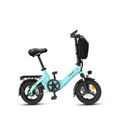
Bodywel T16 Pro: A Compact Folding E-Bike for Urban Commuting
For students who prioritize compact storage, folding functionality, and everyday urban mobility, the Bodywel T16 Pro is one option worth considering. Its folding design is particularly relevant to student life because the bike can be folded when it is not being ridden, making it easier to integrate into living spaces where storage is limited.
Why the T16 Pro Fits a Back-to-School Routine
The T16 Pro can be a practical option for students who need an e-bike for:
- Short commutes to campus
- Apartment or dorm living
- First-mile and last-mile transportation
- Everyday urban riding
- Trips around campus and the surrounding area
- Daily errands after class
- Situations where compact storage matters
The T16 Pro weighs around 46.5 lbs (21.1 kg) and uses a compact folding format. Its main appeal for this type of rider is not being an ultra-lightweight bike, but the combination of folding capability, compact storage, and practical urban mobility.
👉 For a student deciding between a large e-bike designed primarily for long-distance riding and a more compact model designed around everyday flexibility, the latter can sometimes make more sense.
Back-to-School E-Bike Checklist
Before your first week of commuting, take a few minutes to prepare your bike and route:
- Is the battery fully charged?
- Are the tires properly inflated?
- Are the brakes working properly?
- Do you have a suitable lock?
- Do you know where you can legally park your e-bike?
- Is there a suitable place to store the bike?
- Can your local transit system accommodate your folding e-bike?
- Are the front and rear lights working?
- Do you have suitable clothing or rain protection?
- Have you planned a safe route to campus?
- Have you checked your school’s e-bike and bicycle rules?
👉 A little preparation before the semester begins can make the first few weeks of commuting much easier.
E-Bike Commuting in Early Autumn
Back-to-school commuting also means adjusting to the changing season. In September and the following months, mornings can become darker, temperatures can drop, and rain may become more common in many parts of Europe.
Prepare for Shorter Daylight
As daylight hours become shorter, make sure your front and rear lights are working properly. Being visible is especially important when commuting early in the morning or returning home after evening classes.
Check the Weather
Autumn weather can be unpredictable. Before leaving for campus, check the forecast and consider carrying appropriate rain protection if showers are expected.
Ride Carefully on Wet Roads
Rain can affect traction and braking. Take extra care around wet leaves, painted road markings, metal surfaces, and other areas where grip may be reduced.
Store Your Bike and Battery Properly
When possible, keep your bike and battery in a suitable dry environment and follow the manufacturer’s storage recommendations. If you live in a dorm or apartment, check the building’s rules before bringing an e-bike or battery indoors.
Is an E-Bike Worth It for College Students?
For the right student, an e-bike can be a practical alternative to relying entirely on a car, walking, or public transportation. The biggest benefit may not be speed — it may be the ability to make everyday transportation simpler and more flexible.
You can ride to campus, use the bike for errands after class, avoid some parking problems, and potentially combine cycling with public transportation. For students living in smaller spaces, a folding e-bike adds another useful feature: the ability to reduce the bike’s footprint when it is not being used.
👉 The best choice is the one that matches your actual daily routine.
What Is the Best E-Bike for College Students?
There is no universal answer. Start with your commute and lifestyle: How far do you travel? Where will you store the bike? Do you live in a dorm or apartment? Do you use trains or buses? Do you mainly ride around campus, or do you also need the bike for errands and other trips?
👉 For students who prioritize compact storage, folding functionality, and urban mobility, a folding e-bike such as the Bodywel T16 Pro can be an option worth considering.
Frequently Asked Questions
Is an e-bike good for commuting to school?
Yes. An e-bike can be a practical option for students who live within cycling distance of school or college. It can make short commutes more convenient while reducing some of the traffic and parking problems associated with driving.
How far should an e-bike commute be for a student?
There is no fixed distance. A suitable commuting distance depends on the rider, terrain, weather, bike specifications, and personal preference. A short commute of several kilometers can be a good use case for an e-bike, while longer-distance commuters may need to prioritize battery capacity and riding comfort.
What should students look for in an e-bike?
Students should consider compact size, folding capability, practical battery range, comfort, braking performance, storage requirements, and compatibility with their local campus and transportation rules.
Is a folding e-bike good for students?
It can be, particularly for students who have limited storage space, live in dorms or apartments, or need a flexible option for urban transportation. A folding design can make storage and transportation more convenient.
Is a folding e-bike good for dorm living?
A folding e-bike can be useful in a dorm because it can take up less space when stored than some full-size models. However, students should always check their residence’s rules regarding e-bikes and battery storage before bringing one indoors.
Where should I store an e-bike at college?
A secure, dry, and appropriate storage location is generally preferable. The exact options depend on your accommodation and campus rules. Students should check whether e-bikes and their batteries are permitted inside dorm rooms, apartments, or designated storage areas.
Can I take a folding e-bike on public transportation?
It depends on the transportation operator. Rules for bicycles and folding e-bikes vary between trains, buses, metros, and cities. Always check the local operator’s current rules before traveling.
Is the Bodywel T16 Pro lightweight?
The Bodywel T16 Pro weighs around 46.5 lbs (21.1 kg). It is not designed as an ultra-lightweight e-bike. Instead, it focuses on compact folding, everyday usability, and convenient storage for urban riders.
Is the Bodywel T16 Pro suitable for daily commuting?
The T16 Pro is a compact folding e-bike aimed at urban mobility and everyday commuting. Its folding design makes it particularly relevant for riders who have limited storage space or want a more flexible transportation option.
Is an e-bike good for a college campus?
An e-bike can be convenient for larger campuses where walking between locations takes significant time. Before riding, check your college’s rules regarding e-bike use, speed limits, bicycle parking, and where riding is permitted.
What is the best folding e-bike for students?
The best folding e-bike depends on the student’s commute, storage situation, riding environment, and transportation needs. Students prioritizing compact storage and everyday urban mobility may want to consider a model such as the Bodywel T16 Pro.
Final Thoughts
Going back to school does not have to mean going back to the same stressful commute. For students living within cycling distance of campus, an e-bike can provide a practical middle ground between walking, driving, and public transportation.
And for those living in dorms or apartments, using public transportation, or simply looking for a more flexible urban transportation option, a folding e-bike can offer another layer of convenience.
The key is to choose based on your actual lifestyle: commute distance, storage space, campus environment, public transportation, and everyday errands. These factors can matter more than simply choosing the bike with the biggest battery or most powerful motor.
👉 If compact storage and everyday urban flexibility are high on your list, the Bodywel T16 Pro is worth a closer look.