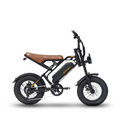
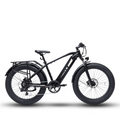
If you’ve been looking into electric bikes in Germany, you’ve probably run into the same question sooner or later: are throttle e-bikes actually legal here? The short answer is — it depends, and the details matter more than most riders expect.
As e-bikes become a common sight in German cities, understanding how they are classified under the law is no longer optional. Choosing the wrong type of e-bike doesn’t just limit where you can ride — it can lead to fines, insurance issues, or even riding illegally without realizing it.
1. How Germany Classifies Electric Bicycles
German law is very specific when it comes to e-bikes. Instead of treating them as one category, it separates them based on motor power, assisted speed, and how the motor is activated.
In practice, e-bikes fall into three main groups:
|
Type
|
Motor Power
|
Max. Assisted Speed
|
Legal Classification
|
Registration / Insurance
|
Driving License
|
Cycle Path Usage
|
|
Pedelec
|
≤250W
|
≤25 km/h
|
Bicycle
|
Not Required
|
Not Required
|
Allowed
|
|
S-Pedelec
|
≤500W
|
≤45 km/h
|
Moped (L1e-B)
|
Required (Plate + Insurance)
|
AM Class
|
Prohibited
|
|
Throttle E-Bike
|
Varies
|
Varies
|
Moped / Motorcycle
|
Required (Plate + Insurance)
|
AM / A1 / A Class
|
Prohibited
|
This classification is the key reason why throttle e-bikes are often misunderstood — and frequently used illegally.
 1.1 Pedelec: The Most Flexible Option
A Pedelec is what most people in Germany casually call an “e-bike.” The motor only assists while you are pedaling. Stop pedaling, and the motor cuts out immediately. As long as the motor power stays within 250W and assistance stops at 25 km/h, the bike is legally treated as a normal bicycle.
That means:
-
No registration
-
No insurance
-
No driver’s license
-
Bike lanes are fully allowed
Wearing a helmet isn’t mandatory by law, but it’s strongly recommended — especially in urban traffic. For daily commuting, this category offers the most freedom with the fewest legal obligations.
1.2 S-Pedelecs and Throttle E-Bikes: Where the Rules Change
Once an e-bike goes beyond the Pedelec limits, German law no longer considers it a bicycle.
S-Pedelecs
S-Pedelecs can assist up to 45 km/h, which already places them firmly in the motor vehicle category. Riders need:
-
An operating permit (ABE)
-
Liability insurance and a license plate
-
At least an AM-class driving license
-
An approved helmet
- They must also stay off bicycle paths and use regular roads.
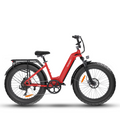
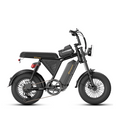
Throttle E-Bikes
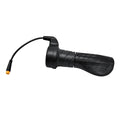
Throttle e-bikes are even more restricted. Because they can move without pedaling, they are classified as mopeds or motorcycles, depending on their specifications. This applies even if the motor power seems modest.
In most cases, this means:
-
Full registration and insurance
-
A valid driver’s license (AM, A1, or A class)
-
No access to bike lanes
This is why many throttle e-bikes sold online are technically not legal for public road use in Germany, despite being marketed as “city e-bikes.”
2. Safety Tips for Riding E-Bikes in Germany
No matter which category you ride in, a few best practices make a real difference — both legally and practically.
-
Protective gear: Helmets are essential for S-Pedelecs and throttle bikes, and a smart choice even on standard Pedelecs.
-
Legal equipment: German regulations require StVZO-approved front and rear lights, plus two independent braking systems.
-
Know where you can ride: Pedelecs belong on bike lanes; S-Pedelecs do not. Mixing this up can lead to fines.
- Theft prevention: E-bikes are valuable. A solid folding lock or built-in GPS tracker is worth the investment.
 3. Bodywel E-Bikes Designed for the German Market
Bodywel focuses on models that match German regulations from the ground up — not as an afterthought.
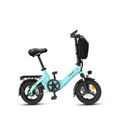
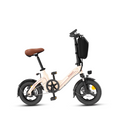
3.1 Bodywel T16 Pro: Compact and City-Ready
The T16 Pro is built for everyday urban mobility. For most city riders, this model hits the legal sweet spot.
-
Fully Pedelec-compliant: 250W motor with assistance capped at 25 km/h
-
No paperwork: No license, insurance, or registration required
-
Easy to carry: Lightweight foldable frame (around 20 kg), ideal for trains and last-mile commuting
-
Urban comfort: Front suspension helps smooth out cobblestones and uneven streets
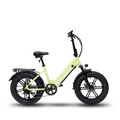
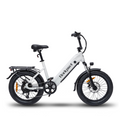
 3.2 Bodywel F20 Series: Stability with Options
The F20 Series is designed for riders who want extra grip and confidence. It’s a practical option for riders who want versatility without ignoring legal boundaries.
-
Wide 4.0 and 3.0-inch tires: Improved traction on wet roads and light gravel
-
Flexible configurations: Available in both Pedelec and S-Pedelec versions
- Long-range capability: High-capacity batteries suitable for longer rides beyond the city

4. Final Thoughts
German e-bike laws may seem strict at first, but they’re actually very consistent once you understand the categories. For most people, a Pedelec-standard e-bike offers the best balance of freedom, safety, and simplicity.
Throttle e-bikes, while popular elsewhere, come with serious legal limitations in Germany and should be approached with caution.
Choosing a compliant model — like the Bodywel T16 Pro or the appropriately configured F20 Series — means fewer worries, fewer restrictions, and a much more enjoyable ride overall.